
In-Work Poverty in the UK: A Brutal Reality
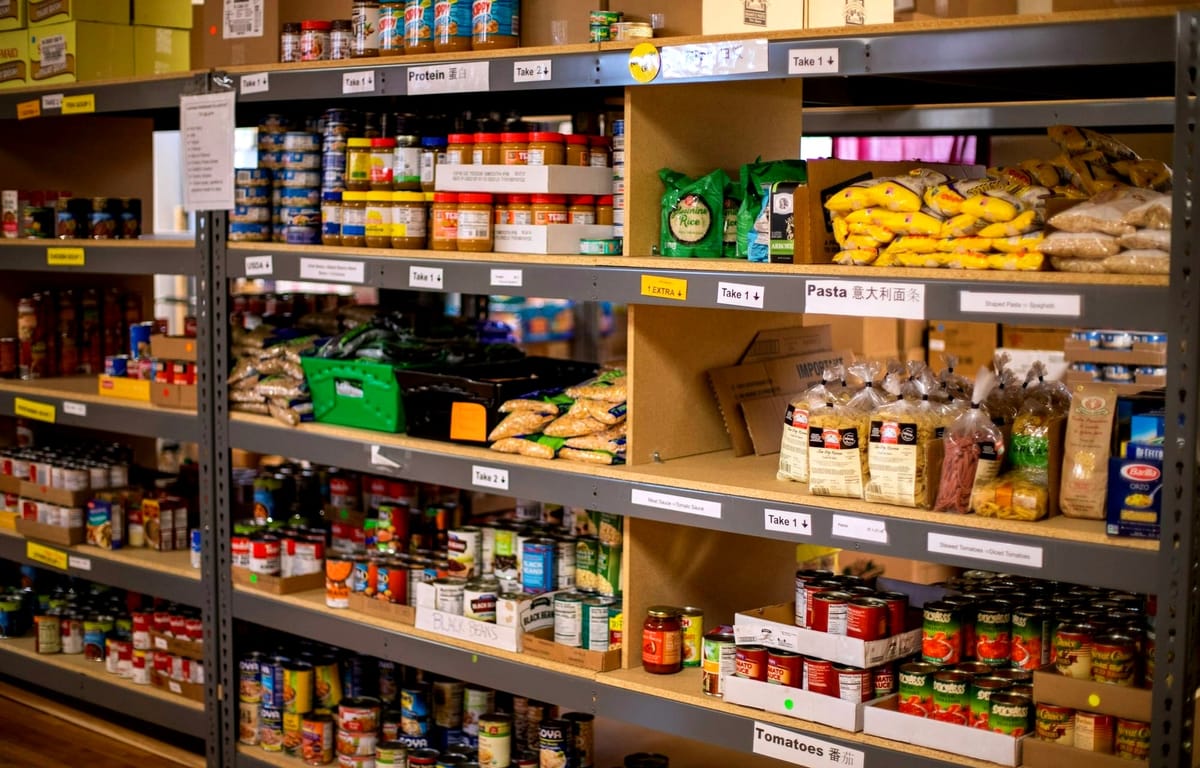
It’s infuriating that in the UK today, millions of hard-working individuals are being let down by a system that’s supposed to reward effort. As of August 2024, over 14.4 million people are living in poverty, including 8.1 million working-age adults and a staggering 4.2 million children (House of Commons Library). This isn’t just a statistic—it’s a disgrace! How can you work full-time and still be struggling financially? Welcome to the grim reality of in-work poverty, a crisis fuelled by decades of policy failures and a system rigged against the working class.
The Statistics of Struggle
Let’s be frank: nearly 22% of the UK population live in poverty, and this situation is not only stagnant but worsening. The Joseph Rowntree Foundation reveals that approximately 14.4 million individuals—including a staggering 3.6 million children—are suffering because our government has chosen to ignore the situation (Joseph Rowntree Foundation). This alarming scenario raises serious questions about the promise that hard work leads to financial security—the reality is drastically different. It’s unconscionable that in a developed nation, so many individuals are left grappling with the harsh sting of poverty, forced to choose between essential needs as basic as food and shelter.
The Inflationary Squeeze
Adding to this struggle is the relentless rise in the cost of living. Inflation, a silent thief, erodes the purchasing power of working families, making it even harder to afford the basics. Driven by a global energy crisis, supply chain disruptions, the impact of Brexit, and loose monetary policy, inflation is a constant threat to those already struggling to make ends meet. Every trip to the supermarket, every energy bill, becomes a source of anxiety and stress.
The Ghosts of Thatcherism
To truly understand the roots of this crisis, we need to look back to the 1980s and the neoliberal policies of Margaret Thatcher. Deregulation, privatisation, and the weakening of trade unions fundamentally shifted the balance of power between employers and workers. This paved the way for wage stagnation, the rise of insecure work, and the erosion of public services, creating the perfect storm for in-work poverty to flourish.
The Crushing Weight of Insecurity: Housing, Food and Energy
This perfect storm has created a bleak reality for many working families in the UK, where putting in the hours simply isn't enough to guarantee a decent standard of living. They're caught in a web of insecurity, struggling to afford the basics like housing, food, and energy.
Shocking Food Insecurity Statistics
The numbers are stark: 1 in 5 people in the UK are skipping meals to make ends meet, as highlighted by the Food Foundation. In January 2024, it was reported that 15% of households were living in food insecurity, unable to afford adequate meals (Food Foundation). This figure paints a horrifying picture of what it truly means to struggle in a country that prides itself on being a leader in social welfare. Families shouldn’t have to go hungry in a society that claims to value hard work and prosperity.
Moreover, as Andy McDonald, MP, highlighted in a post from March 2022, one in six working families at that time were living in poverty, which underscored the dire situation many found themselves in.
The extent of in-work poverty proves the UK's economic system is totally broken.
— Andy McDonald MP for Middlesbrough & Thornaby East (@AndyMcDonaldMP) March 16, 2022
That 1 in 6 working families are in poverty, a record high, puts paid to all the Tories' boasts about job creation.
They way our key workers are treated is an indictment of this Government. pic.twitter.com/LL3PSjzCi3
The Housing Crisis: A Roof Over Your Head, But At What Cost?
But it's not just low wages and rising prices that are driving this food insecurity. The lack of affordable housing is a major contributor. The decimation of social housing stock, coupled with the unchecked greed of private landlords charging extortionate rents, has created a housing crisis that pushes working families to the brink. They're forced to choose between paying rent and putting food on the table, a cruel dilemma no one should face in modern Britain.
The "Right to Buy" scheme, introduced by Margaret Thatcher, allowed council tenants to purchase their homes at discounted prices. While seemingly beneficial, this policy had a devastating long-term consequence: it failed to replenish the social housing stock. This created a gaping hole in the housing market, leaving low-income families with fewer and fewer affordable options.
Successive governments have done little to rectify this situation, instead prioritising private developers who build expensive properties out of reach for ordinary working families. These homes are often snapped up by investors and landlords, who then charge extortionate rents, further exacerbating the housing crisis and contributing to food insecurity.
Energy Insecurity: Heat or Eat?
And let's not forget about energy. The privatisation of energy companies has led to sky-high bills, leaving many working families struggling to heat their homes. It's a scandal that in one of the wealthiest countries in the world, people are forced to choose between heating and eating.
This is the legacy of Thatcher's unleashed market forces – a system where essential needs like housing and energy are treated as commodities to be traded for profit, rather than fundamental rights. It's a system that's failing working people, leaving them struggling to afford the basics, even when they're putting in the hours.
Historical Context of In-Work Poverty: Decades of Neglect
In-work poverty has roots deep within the UK’s economic policies over the past few decades. Changes in the labour market, including the rise of zero-hour contracts and the decline of stable, full-time jobs, have contributed to a system where hard work does not guarantee financial security. Many workers find themselves trapped in low-paying, unstable jobs with little to no benefits, further exacerbating the issue.
As Dr. Helen Barnard, deputy director of the Joseph Rowntree Foundation, states, “In-work poverty is not just about low wages; it's also about the cost of living and the lack of support for families who are trying to do the right thing.” This perspective highlights the multifaceted nature of the problem, illustrating that it’s not merely an issue of wages but also of systemic support.
Personal Stories and Perspectives
To illustrate the real impact of in-work poverty, consider the story of Emma, a single mother from Manchester who works two part-time jobs and still struggles to provide for her two children. She shares, “I work hard every day, and yet I’m still having to choose between feeding my kids and paying the bills. It feels like I’m trapped in a cycle that I can’t escape from—no matter how hard I try.”
Similarly, John, a warehouse worker in London, expressed frustration about the system: “I put in long hours, but the pay is barely enough to cover rent. I often rely on food banks to get through the month. It's heartbreaking to feel like you're working for nothing.”
These stories are just two, among millions that highlight the stark reality faced by many individuals in similar situations, reminding us that these statistics represent real people with real struggles.
Government Failures
So, what are our leaders doing about this? Absolutely nothing that matters! After 14 years of Conservative rule that gutted our safety nets, the new Labour government has made some noise about housing and energy bills—but when it comes to benefits, they’ve been shockingly silent. The removal of the £20 uplift in Universal Credit is nothing short of criminal, a direct attack on those desperately trying to get by. What about the benefits that people rely on? It’s like watching a slow-motion train wreck!
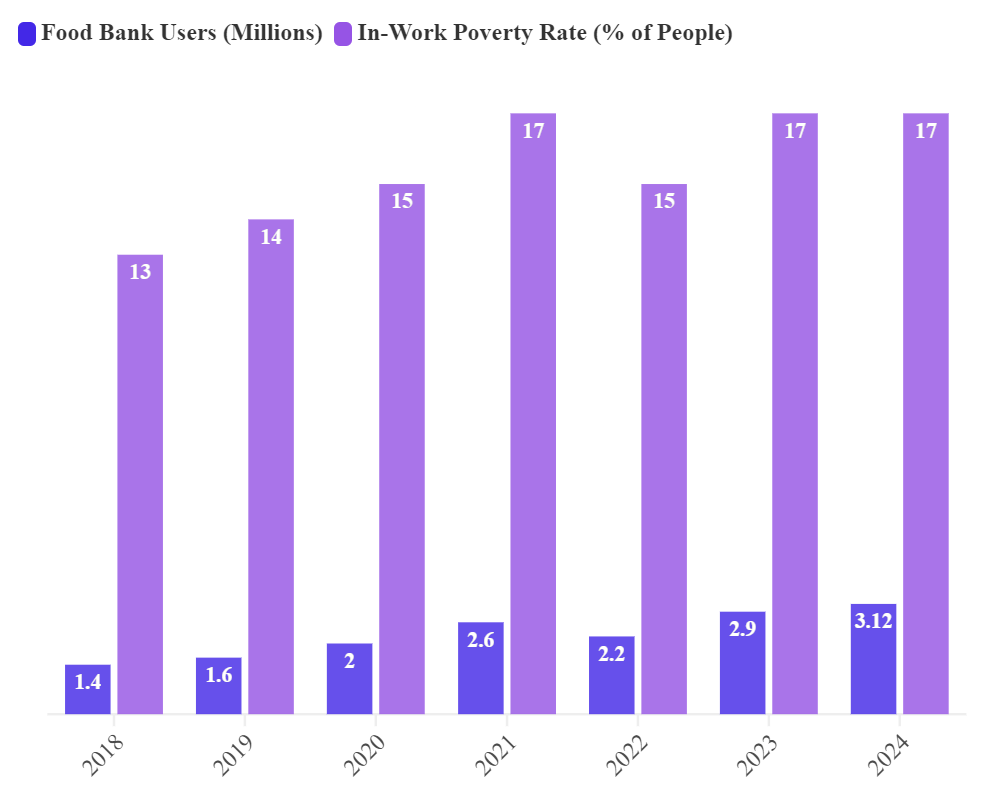
Let’s get specific: during the pandemic, the government introduced temporary measures; however, once the dust settled, they yanked support away. This led to people facing hardship and a rise in food bank usage with more than 3.1 million emergency food parcels being distributed via the Trussell Trust’s UK-wide network, reflecting a shocking increase in food insecurity (Trussell Trust). We seem to be living in a dystopian nightmare where the government turns a blind eye while people literally can’t afford to eat!
Moreover, the Conservative legacy has left us with a severe shortage of affordable housing, with over 1.5 million families on waiting lists for social housing (National Housing Federation). The failure to invest in public housing has resulted in skyrocketing rents that push more families into poverty. Figures show that 43% of social renters and 35% of private renters are pushed into poverty after housing costs. This situation is not merely negligence; it’s a slap in the face. Families are forced to choose between paying rent and putting food on the table as if it’s some twisted game.
The Hypocrisy of MPs' Salaries and Expenses
Meanwhile, consider the fact that MPs' salaries and expense allowances have seen consistent increases over the years. According to the (Independent Parliamentary Standards Authority), MPs’ salaries have increased to an average of £81,932, while the average worker struggles to make ends meet. With lavish expense claims for food and drink, the hypocrisy is staggering: how can they justify their financial gains while working families continue to struggle? This blatant disregard for the plight of ordinary citizens only adds fuel to the fire of public frustration.
Systemic Issues with Capitalism
Let’s not sugarcoat it: the capitalist system we live in is rigged against the working class. It’s like a high-stakes casino where the house always wins, and guess what? The house is the wealthy elite at the top. Insecure work is rampant; zero-hour contracts and part-time gigs are the norm, leaving many workers with insufficient income while the top brass enjoy their profits.
The New Economics Foundation’s analysis highlights that child poverty in the worst affected areas has increased 5.6 times faster than in the wealthiest areas since 2014-15 (New Economics Foundation). This growing economic disparity obscures the actual struggles of those trying to make a living. While the rich get richer, working families are left to fend for themselves, facing a staggering income inequality that is increasingly difficult to ignore.
To better understand these realities, below the Channel 4 documentary "Working But Poor: Millions in Work and in Poverty" provides valuable insights into this ongoing crisis.
Deepening Crisis: Child Poverty
And let’s talk about the kids—3.6 million children living in poverty! If that doesn’t make you want to smash something, what will? The rise in child poverty is particularly acute in the most deprived areas, where families are struggling to provide basic necessities. These children are not just numbers on a page; they represent our future, and allowing them to suffer in poverty is a crime against humanity.
Take a look at the two-child limit on benefits—this policy actively punishes larger families, forcing them further into hardship. Families with three or more children have a poverty rate of 43%, and with policies like this, it’s clear the government is more interested in controlling welfare costs than actually helping families thrive (GOV.UK).
Additionally, insights from Gordon Brown regarding child poverty levels in the UK further emphasise the need for urgent action. See his comments on SkyNews below.
Public Sentiment and Awareness
People are starting to wake up, and thank goodness for that! Surveys show that a staggering 80% of the public are worried about the rising cost of living, according to a recent YouGov poll (YouGov). But what do we see from our leaders? A deafening silence and a complete lack of action that screams negligence. The disconnect between what the government says and what the people experience is infuriating.
Addressing Counterarguments
Some may argue that the Labour government is still in its early days and requires time to implement comprehensive reforms. While it’s true that change doesn’t happen overnight, the urgency of the situation demands immediate action—especially regarding the benefits system that directly impacts the day-to-day lives of millions. Critics may also point to the complexities of addressing in-work poverty, including rising living costs, global economic pressures, and the challenges of balancing budgets. However, these challenges should not serve as excuses for inaction; it is crucial that the government prioritises the needs of vulnerable families and actively collaborates with organisations and advocacy groups to effectively address this crisis.
A Call to Action: Demand Change Now
The crisis of in-work poverty is a scandal that cannot be ignored any longer. It's high time we turn our anger into action and demand the change we desperately need. Here’s how we can push for this together:
- Reinstate and Boost Benefits: The government's removal of the £20 uplift in Universal Credit has left many struggling. We demand its permanent reinstatement and adjustment to reflect the real cost of living. People deserve dignity, not despair.
- Adopt a Genuine Living Wage: We need a living wage based on the actual cost of living, not arbitrary figures. Germany's minimum wage policies and New Zealand's Living Wage Movement have shown significant positive impacts. It’s time for the UK to follow suit.
- Build Affordable Housing Now: The housing crisis demands urgent attention. Finland’s Housing First model offers a successful blueprint, having drastically reduced homelessness. Investment in affordable, quality housing is essential—no family should choose between a roof and food.
- Support Families, Not Punish Them: We need to remove the two-child limit on benefits and replace it with real support measures, akin to Denmark’s comprehensive family policies, which provide essential childcare and educational support.
- Hold Our Leaders to Account: Transparency and accountability are non-negotiable. Emulating the open governance practices of the Scandinavian countries can help ensure we know where our money goes and why poverty persists source.
- Unite and Amplify: Use social media and community networks to raise awareness and demand immediate policy changes. Share this article, join campaigns and advocacy groups, and use hashtags like #EndInWorkPoverty to make our voices heard.
- Learn from the Best: Let's emulate successful policies from the Netherlands, where universal basic income proposals have shown potential to reduce poverty, and Japan's consideration of EITC to strengthen the social safety net.
- Act Immediately: Don’t delay—take action now! Sign petitions, contact your MPs, and let your voice be heard. Help build the momentum for urgent change.
Conclusion
The in-work poverty crisis in the UK is a scandal that cannot be ignored any longer. It’s time to stand up, speak out, and demand a system that prioritises people over profits. By addressing in-work poverty, not only can we uplift millions of families, but we can also strengthen our society as a whole.
Imagine a future where every child has enough to eat, where hard work is genuinely rewarded, and where families can thrive without the suffocating grip of poverty. We deserve better, and we cannot rest until every individual has the opportunity to live with dignity and security. So let’s get angry, let’s get loud, and let’s make sure those in power hear us!


