
Britain's North Sea Giveaway: A National Tragedy
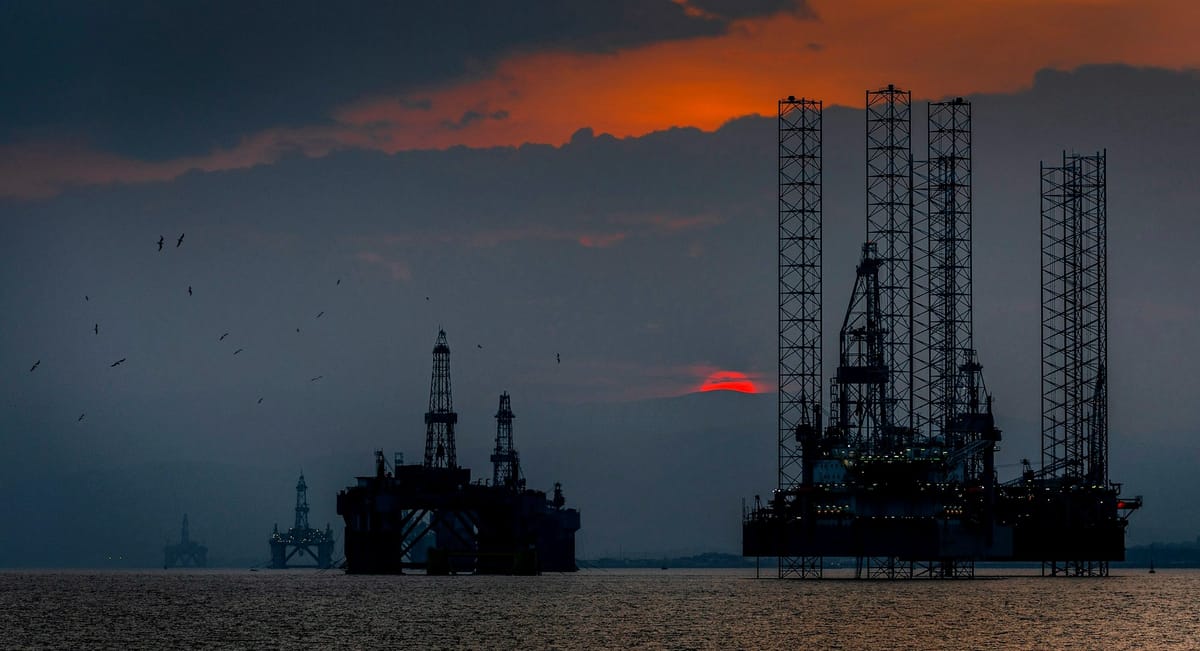
Article 1: 'The Great Betrayal'
Imagine a nation sitting on a vast treasure trove of oil and gas, enough to fuel its homes and industries for generations. Now imagine that nation selling off this precious resource to private companies, leaving its citizens at the mercy of volatile global markets and sky-high energy bills. This isn't a fantasy scenario; it's the stark reality of Britain's North Sea oil and gas fields.
In the 1980s, under the banner of privatisation and championed by then-Prime Minister Margaret Thatcher, the UK government made the fateful decision to sell off its stake in the North Sea. The promise, trumpeted by free-market enthusiasts, was that private companies would bring investment, efficiency, and lower prices. The reality, however, has been a national tragedy, a squandered opportunity, and a stark example of prioritising short-term gains over long-term national well-being.
John, a retired fisherman from Aberdeen, remembers the bustling docks in the 80s, when the North Sea oil boom brought jobs and prosperity to his community. Now, he watches as those same rigs pump oil and gas for foreign companies, while his town struggles with unemployment and rising energy bills. 'It feels like we've been robbed,' he says, 'robbed of our resources and our future.'
A Squandered Opportunity
Instead of using North Sea revenues to benefit the public, the UK allowed private companies to reap the rewards, leaving the nation with little to show for its valuable resource. While Norway, a country with similar oil reserves, created a sovereign wealth fund (the Government Pension Fund Global) that now holds over £1.4 trillion (as of November 2024), the UK has no such safety net.
Norway's fund, established in 1990, invests its oil revenues in a diverse portfolio of global assets, generating substantial returns that are used to fund public services, infrastructure, and social programs. This has allowed Norway to build a prosperous and equitable society, with high living standards and a strong social safety net. For example, Norway has one of the lowest poverty rates in the world at 7.7% (compared to the UK's 18.4%), and its citizens enjoy universal healthcare and free education, including university. Their robust public transportation system is heavily subsidised by the fund, and infrastructure projects receive significant investment, leading to efficient and modern facilities. In the 2023 budget, the Norwegian government withdrew £37 billion from the fund to support public spending.
In stark contrast, the UK squandered its North Sea windfall. Instead of investing in long-term infrastructure projects like high-speed rail or renewable energy, the proceeds from privatisation were largely used to fund tax cuts and short-term spending. Instead of a legacy of prosperity, the UK inherited a legacy of neglect. Crumbling schools, overcrowded hospitals, and neglected communities stand as a stark reminder of the squandered opportunity. The UK's infrastructure, particularly its transportation networks, lag behind many European counterparts. Furthermore, the lack of investment in affordable housing and social programs has contributed to rising inequality and social unrest.
Norway's success in managing its oil wealth is not just about economics; it's also about a deep-rooted cultural commitment to social responsibility and long-term planning. In contrast, the UK's embrace of short-term profit maximization and its reluctance to intervene in the 'free market' have led to a very different outcome.
The Price of Privatisation
The consequences of the North Sea giveaway are felt by every household and business in the UK. We are now forced to pay exorbitant prices for energy, subject to the whims of global markets and the profit motives of multinational corporations.
In 2023, UK households spent an estimated £60 billion on energy bills, a staggering figure that highlights the financial burden faced by families across the country. This burden falls disproportionately on low-income families, pushing many into fuel poverty and forcing them to choose between heating and eating. According to the latest government figures (published in November 2024), an estimated 7.4 million households in the UK were in fuel poverty in 2023.
Meanwhile, oil and gas giants like BP and Shell are raking in record profits, fueled by soaring energy prices. In the first nine months of 2024, BP reported profits of £15.7 billion, while Shell reported profits of £20.1 billion. These companies have paid out billions in dividends to shareholders, while investing relatively little in renewable energy or measures to reduce carbon emissions. For instance, in 2023, BP invested only 5% of its capital expenditure in renewable energy projects, while Shell invested just 7%.
Foreign Control
Adding insult to injury, much of the UK's North Sea infrastructure is now owned and controlled by foreign companies. This means that decisions about production, investment, and even pricing are often made in boardrooms thousands of miles away, with little regard for the needs of the British people.
For example, the largest oil field in the UK, the Buzzard field, is operated by the Chinese state-owned oil company CNOOC. Other major players include the French company TotalEnergies and the Norwegian company Equinor. This lack of control over our energy resources has left the UK vulnerable to global price shocks and geopolitical instability. The recent energy crisis, triggered by the conflict in Ukraine, exposed this vulnerability, with UK energy prices soaring due to reliance on imported gas.
Quantifying the Loss
It's difficult to put an exact figure on how much the UK has lost due to the privatisation of the North Sea, but estimates suggest it could be in the hundreds of billions of pounds.
One study by the New Economics Foundation estimated that if the UK had followed Norway's model, it could have accumulated a sovereign wealth fund worth over £500 billion by 2017. This money could have been used to fund public services, invest in infrastructure, and create a more equitable society. To put this into perspective, the UK's entire national debt in 2024 stands at approximately £2.6 trillion. A sovereign wealth fund of that magnitude could have significantly reduced this debt or funded vital public services.
Exploring Alternatives
The privatisation of the North Sea is not a fait accompli. There are alternative models that could ensure a greater share of the benefits flows to the British public.
- Partial Public Ownership: The government could re-establish a national oil company or take a stake in existing companies, allowing it to share in the profits and influence decision-making. Partial public ownership has been successfully implemented in countries like Brazil, where the state-owned oil company Petrobras plays a major role in the energy sector, generating revenue for public services and investing in renewable energy.
- Taxation and Revenue Sharing: The UK could implement a more robust taxation regime for oil and gas companies, ensuring that a greater portion of their profits are used for the public good. This could involve increasing the existing windfall tax or introducing a new tax specifically on North Sea oil and gas production. For example, the Labour Party has proposed a "proper" windfall tax on oil and gas producers, which they estimate could raise £13 billion. Alternatively, a more robust taxation regime, like the one in Alaska, where oil companies pay a production tax based on their profits, could ensure that a greater share of the benefits flows to the public.
A Call for Reckoning
It's time to reclaim our energy future. It's time to demand that the UK's oil and gas resources are used to benefit the British people, not just line the pockets of multinational corporations. Contact your MP and demand they support re-nationalisation of the North Sea. Join campaign groups like that are fighting for energy justice. Support the development of renewable energy and hold the government accountable for its energy policies.
We need to:
- Re-Nationalise the North Sea: Bring our oil and gas fields back under public ownership to ensure that the profits are used for the public good, investing in infrastructure, public services, and a just transition to renewable energy.
- Invest in Renewables: Accelerate the transition to renewable energy sources to reduce our reliance on fossil fuels and create a more sustainable energy future.
- Hold the Powerful Accountable: Demand that politicians and regulators prioritise the interests of the British people over those of corporations.
The North Sea giveaway was a historic mistake, a betrayal of the public trust, and a missed opportunity to secure a brighter future for the UK. It's time to right this wrong and reclaim our energy destiny. The longer we wait, the more we lose. The North Sea's resources are finite, and the window of opportunity to reclaim our energy future is closing. We must act now to secure a just and sustainable energy system for generations to come.


